
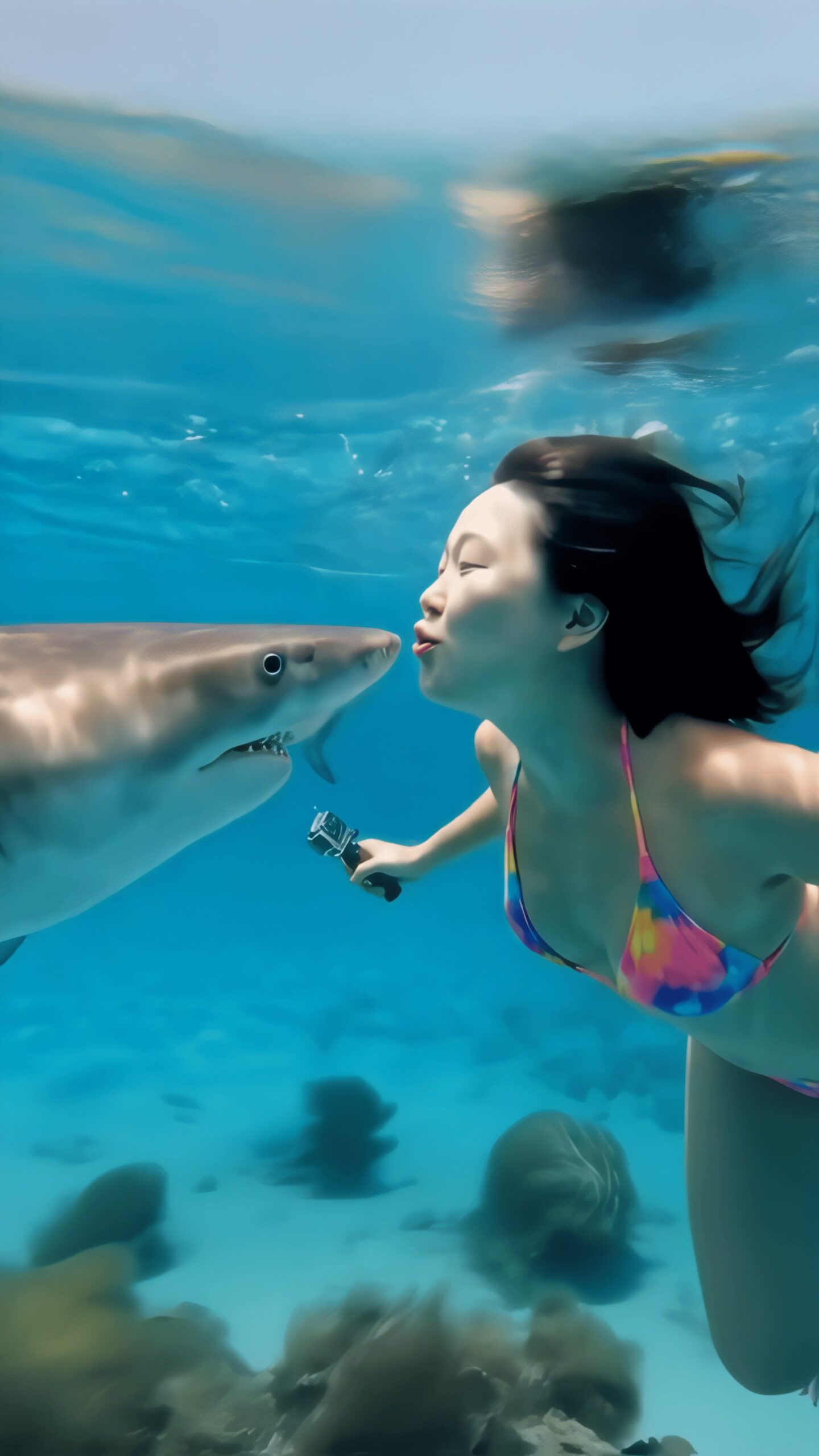
My goal with AI video isn’t just to make something look “AI-generated.” It’s about leveraging these powerful tools to create compelling visual stories that resonate, even if the initial idea is something as delightfully absurd as a girl swimming with a tiger shark! This project truly put my “keep trying” mentality to the test, and here’s the workflow that helped me get there.
Step 1: The Genesis – Ideation and Visual Blueprinting with Stable Matrix
Every great video starts with a clear vision, no matter how outlandish. For the “shark” project, the core idea was the humorous juxtaposition. This is where Stable Matrix comes into play. It’s my go-to for rapidly prototyping and visualizing initial concepts.
I start by feeding Stable Matrix a blend of text prompts and visual references to define the subjects and environment. For instance, for the shark project, it wasn’t just “girl and shark.” Instead, it was more like: “athletic female swimmer, calm pool water, highly detailed tiger shark, serene interaction, underwater perspective, soft natural light.”
Then comes the iterative process. I generate multiple models, tweak the prompts, and refine until I get that “aha!” moment. I’m looking for models that not only look incredible but also hint at the narrative I want to build. The key here is to embrace the experimental nature; you’re sculpting with words and data, not clay, and often the best results come after many attempts.
Step 2: Breathing Life into Stills with Kling AI & The Iterative Animation Grind
Once I have my hero still images from Stable Matrix, it’s time to make them move. This is where Kling AI shines as my text-to-image-to-video powerhouse. I take those high-fidelity renders and feed them into Kling AI, accompanied by a new set of prompts focusing on motion.
This stage is all about animation prompts, and it’s heavily reliant on trial and error. My initial prompts might be simple, like “girl swimming gently, shark glides past.” But I quickly iterate, adding details for camera movement, subject interactions, and emotional tone. For instance, “smooth underwater tracking shot, girl gracefully strokes, large tiger shark slowly passes by, subtle eye contact, humorous tension.”
It’s a dance between precise instruction and creative exploration. I’m making countless small adjustments, observing the subtle shifts in animation, and refining my prompts until the subjects move exactly as I envision—smoothly, purposefully, and with character. This is where I encountered many “failed attempts, glitchy moments, and clips that just didn’t quite capture the humor I was going for.” It’s a true testament to the “keep trying” mentality when working with new tech!
Step 3: Elevating Dynamics with Higgsfield AI for Camera Work
A static camera can kill even the best animation. That’s why, after getting the core animation locked down in Kling AI, I move to Higgsfield AI to inject dynamic camera movements and effects.
Higgsfield AI allows me to add that cinematic flair. I can simulate dollies, trucks, pans, tilts, and even more complex orbital movements around the subjects. This transforms a simple animation into a much more engaging visual experience. For example, I might take a Kling AI clip of the girl and shark swimming and use Higgsfield to add a dramatic push-in shot, followed by a sweeping crane shot to reveal the vastness of the environment. It’s about bringing a director’s eye to the AI-generated footage.
Step 4: The Finishing Touch – Composing and Enhancing in Post-Production
The raw AI-generated clips are just the ingredients. The magic happens in post-production, where I bring everything together using a combination of CapCut, Topaz AI Video, and Adobe Premiere Pro.
First, CapCut is fantastic for quick cuts, initial sequencing, and basic trimming of all the short clips I’ve generated. It helps me lay down the story’s rhythm.
Next, Topaz AI Video is an absolute game-changer for enhancing video quality. AI-generated footage, while incredible, can sometimes benefit from sharpening, de-noising, and upscaling, especially if I want to push it to a higher resolution for a client. Topaz makes those subtle imperfections disappear, giving the video a much more polished and professional look.
Finally, Adobe Premiere Pro is where the real finessing occurs. Here, I handle:
- Advanced Color Grading: Establishing the mood and visual style.
- Refined Pacing and Transitions: Ensuring a seamless flow between scenes.
- Sound Design & Music: This is crucial for emotional impact. I meticulously select sound effects for ambient water sounds, subtle movements, and pair them with a perfectly timed music track that amplifies the visual narrative, adding to the humor or tension. The right audio can elevate an AI-generated video from cool to captivating.
The Road Ahead: My Take on AI in Video Production
This process isn’t just about using fancy tools; it’s about blending creative intuition with cutting-edge technology. It’s about pushing the boundaries of what’s possible, even if it means countless iterations and “failed” prompts along the way. That’s where the learning happens, and that’s how we discover new visual languages. My go-to tools for this particular adventure were VEO-3 Ultra and Dream Machine, which proved to be incredibly powerful in helping me refine the concept and get the dynamic, funny visual I envisioned. It’s amazing to see how quickly these platforms are evolving and putting incredible creative power into our hands.
AI video generation is rapidly evolving, and I’m excited to continue exploring its potential. It’s a powerful ally for any designer or producer looking to deliver impactful visual content in a dynamic market.
What’s your biggest challenge or excitement when thinking about AI in video production? I’d love to hear your thoughts in the comments below!